

Electrical Safety in the Workplace: Your Complete Guide
Jump To:
- Why Electrical Safety in the Workplace Matters
- 5 Main Electrical Hazards
- Lockout/Tagout (LOTO)
- Building an Effective Electrical Safety Program
- Selecting the Right PPE
- FAQs
A frayed cord. A skipped lockout step. A worker who assumes the breaker is off. These are the small moments where electrical accidents start, and they happen more often than most safety teams realize. Electrical safety in the workplace protects people as much as it protects equipment.
Below, we’re covering the hazards, OSHA standards, and training paths that keep your workforce protected and your operation compliant. This way, you’ll confidently know what you should know regarding safety and precautions in your workplace. Let’s get started.
Why Electrical Safety in the Workplace Matters
Electrical hazards rank among the leading causes of workplace injury and death, and the risk touches nearly every industry, including manufacturing, construction, warehousing, and even offices.
Electrical safety training gives employees the knowledge to recognize dangerous conditions before they cause harm, while a documented electrical safety program keeps that knowledge consistent across every shift and location.
Workplace electrical safety training also supports compliance with OSHA and NFPA 70E requirements, reducing the citations and downtime that follow a preventable incident. For safety managers, investing in electrical safety training is one of the clearest ways to lower incident rates and protect the bottom line.
The 5 Main Electrical Hazards Every Employee Should Know
Electrical hazard training should cover these five threats in detail:
- Electric Shock: current disrupts muscle and heart function, even at low voltages.
- Electrocution: the BLS-reported fifth-leading cause of workplace fatalities, often from contact with high-voltage lines or ungrounded tools.
- Arc Flash: temperatures above 35,000°F cause severe burns without direct contact.
- Arc Blast: the pressure wave can throw workers, displace organs, and send molten metal flying.
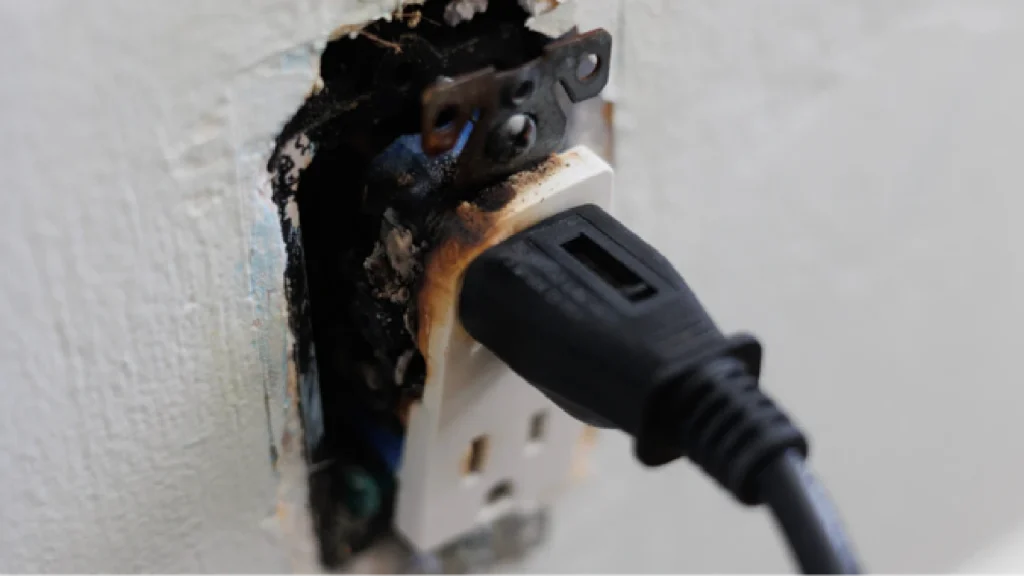
- Electrical Fires: frequently start in outlets, panels, or extension cords and spread fast in industrial settings.
The next sections cover OSHA electrical safety training standards and how to control each hazard.

Lockout/Tagout (LOTO): A Core Component of Electrical Safety
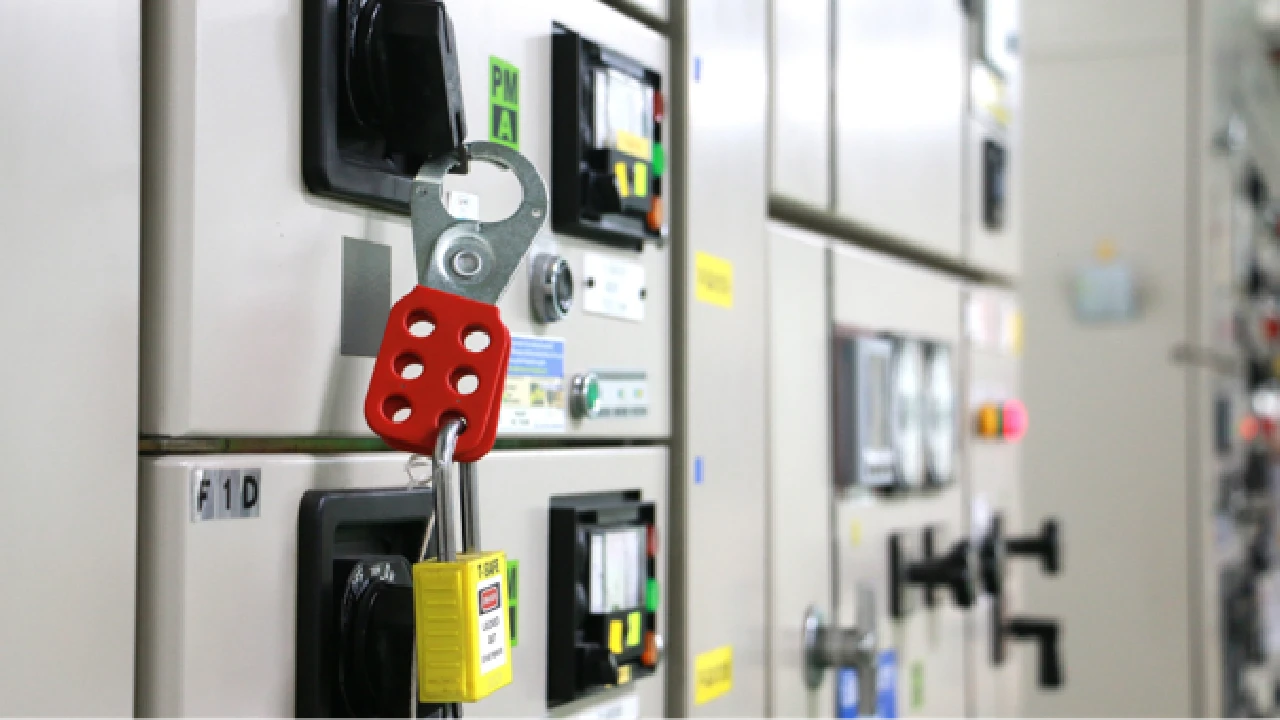
Lockout/tagout, or LOTO, is the set of procedures that de-energize electrical equipment, remove stored energy, and keep it from restarting unexpectedly while someone is servicing or maintaining it.
Unlike the hazards described above, LOTO failures don’t happen during normal operation; they happen when a machine assumed to be off gets an unexpected jolt of power or releases stored energy. OSHA’s lockout tagout standard, 29 CFR 1910.147, requires a documented energy control program, authorized employees trained on your specific equipment, and written lockout tagout procedures for every machine that carries residual energy.
Lockout tagout training is not optional for anyone who repairs, adjusts, or services electrical systems or machinery, and the lockout tagout steps involved vary by machine, which is why generic training rarely suffices during an audit. A program built around your actual equipment, not a generic template, is what separates a facility that passes inspection from one that gets cited.
Building an Effective Electrical Safety Program
An effective electrical safety program starts with a written policy that assigns clear ownership, typically to a safety manager or EHS director accountable for every update and audit. Electrical safety programs also need to define who is authorized to work on energized equipment, drawing a firm line between qualified and unqualified employees before any work begins.
Beyond documentation, the program has to include a training schedule, incident reporting procedures, and a review cycle triggered by changes in equipment or facility layout, in addition to a fixed annual date.
Facilities that treat their electrical safety program as a living document, rather than a binder that sits untouched between audits, see fewer repeat citations year over year.
The 3 Elements of a Basic Electrical Safety Program
An electrical safety program includes three core elements, often summarized as Recognize, Evaluate, and Control:
- Recognize: Identify every source of electrical hazard exposure, including panels, portable tools, and temporary wiring.
- Evaluate: Assess the severity and likelihood of each hazard to determine the level of protection required.
- Control: Apply safeguards, such as de-energization, guarding, or PPE, to reduce the risk to an acceptable level.
Selecting the Right PPE for Electrical and Arc Flash Hazards
Selecting arc flash PPE starts with an arc flash risk assessment, which determines the PPE in one of two ways: Incident Energy Analysis Method or Arc Flash PPE Category Method, and is required for each task and location.
The PPE’s arc rating, measured in cal/cm², needs to meet or exceed the calculated incident energy, and testing confirms that rating, not the label alone. Rubber insulating gloves need a voltage class matched to the equipment, insulated hand tools prevent accidental contact, and face shields or flash suits round out higher-HRC tasks.
NFPA 70E Annex H offers a helpful starting table, but a site-specific assessment always takes priority over generic charts.
Electrical Safety Training and Certification Pathways
Training for electrical safety exists on a spectrum: basic awareness courses serve employees who occasionally work near live equipment, while full certification (and recertification) programs serve safety professionals who own compliance for an entire facility.
Credentials like the Electrical Safety Specialist (ESS) and NFPA 70E: Qualified Electrical Worker certificates sit at the professional end of that spectrum, and offer students specific credentials required by either OSHA or NFPA.
Many electrical safety courses now run online, letting safety managers build credentialed expertise without pulling staff off the floor for a multiple-day classroom course. Choosing the right pathway comes down to the role: awareness training for general staff, qualified worker training for those who service equipment, and a recognized certification for whoever is accountable for the program. While online courses are a great option, NASP can provide high-quality, instructor-led courses for groups of 8 or more students. For more information, click here.
Earn Your Electrical Safety Specialist (ESS) Certification or NFPA 70E Qualified Worker with NASP
Electrical safety in the workplace only holds up when hazard awareness, compliance, and hands-on training reinforce each other, and NASP’s Electrical Safety Specialist (ESS) and NFPA 70E course meet the training requirements expected of those working on live, energized equipment. You’ll leave with the skills to recognize hazards, apply the right controls, and hold your program to the standard OSHA and NFPA 70E expect.
FAQs About Electrical Safety Training
How much does electrical safety training cost?
Pricing depends on the course level, delivery format, and whether an exam is included. Basic awareness sessions are typically lower cost, while more advanced electrical safety certificate courses may cost a few hundred dollars and include course materials, an exam, and an IACET-accredited certificate of completion.
How long does it take to become an Electrical Safety Specialist?
The ESS course takes about 13 hours to complete, and the NFPA 70E course takes about 8 hours to complete, though NASP gives students up to six months to finish and pass the required exam.
What is the difference between a qualified and an unqualified electrical worker?
A qualified worker has specific training on the equipment and hazards involved in a task, while an unqualified worker has not, which limits how closely they can approach energized parts.
How often does an electrical safety certification need to be renewed?
You should renew your certification every three years through a refresher course and exam, which keeps the credential and your compliance knowledge current.


WORKING ON OR NEAR ENERGIZED ELECTRICAL EQUIPMENT?
Get trained with NASP’s online NFPA 70E Qualified Electrical Worker course!
Related Posts

OSHA’s FY2026 Top 10 Looks Exactly Like Last Year’s. September’s Citations Show Why.
10.07.2026 Current Events
OSHA’s New Overdose Guidance Wants Naloxone Stored Next to Your AED
10.07.2026 Compliance
Two Valves, Six Minutes, $95 Million: The CSB’s Final Report on the Shell Monaca Explosion
10.07.2026 Current Events
Explore Our Live and Online Safety Courses
Learn at your own pace online or join an instructor-led live training session.