

Two Valves, Six Minutes, $95 Million: The CSB’s Final Report on the Shell Monaca Explosion
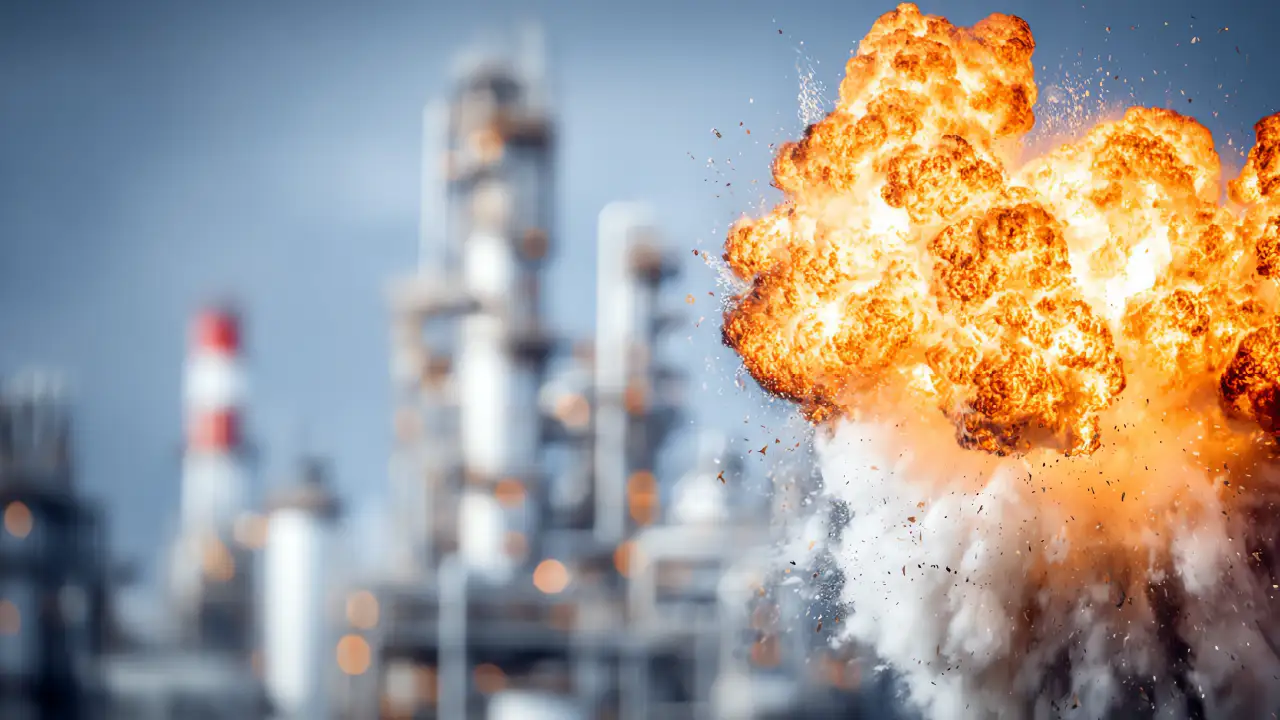
The U.S. Chemical Safety and Hazard Investigation Board released its final report on September 16, 2026, covering the June 4, 2025, explosion and fire at Shell Polymers Monaca in Beaver County, Pennsylvania.
Nobody died. Fifteen employees evacuated, and several were treated for minor injuries, and that had a lot to do with where people happened to be standing when it went off. It’s still worth reading, because one wrong move on a control screen caused all of it.
What Happened
Monaca turns ethane into ethylene in a cracking unit with seven furnaces. The process leaves a solid carbon residue called coke, which collects in coke traps so it doesn’t travel downstream.
During an outage, Shell had the coke traps cleaned. It was the first time that work had been done on these furnaces, so every procedure covering it was being run in the field for the first time rather than refined over years. Cleaning on Furnace 5 finished June 3, 2025. By then, four other furnaces were back in cracking mode.
The next day, as the unit was being brought back, a process control engineer opened two motor-operated isolation valves at the same time. That opened a path for flammable cracked gas to flow backward out of a downstream quench tower and into the furnace firebox. More than 600 pounds collected there. About six minutes later it reached the lit pilots and went off, blowing out the firebox wall.
Shell put the damage at roughly $95 million and the release at about 5,100 pounds of ethylene and combustion products, including benzene and 1,3-butadiene. Furnace 5 went back into service some seven months later.
Three Things Worth Taking Away
The engineer had never done the job before. Investigators found the process control engineer had limited process knowledge and no prior experience with the task, and that employees generally hadn’t been trained on the protocols that applied. This wasn’t a veteran operator having a bad morning.
The screen made the mistake easy to make. Three valves appeared on the interface with numbers that differed only in the last digit. The CSB found the display lacked clear labeling and confirmation steps and wasn’t laid out well enough to tell the valves apart reliably.
The hazard was already documented, and so was the fix. Shell’s own process hazard analyses had flagged cracked-gas backflow as potentially fatal. The plant hadn’t set up the engineered controls available to stop it, including a control panel the equipment manufacturer supplied that could have blocked the flow during the procedure. Investigators counted eleven administrative controls standing between normal operations and this explosion. Every one of them was a procedure, a check, or a person paying attention, and the gas went through all eleven in a single motion.
CSB investigator Owen Trippany framed the lesson around engineered safeguards that hold “in all modes of operation,” rather than leaning on procedures and the people following them. The Board sent Shell two recommendations, both aimed at finding hazards protected only by administrative controls and putting engineering in front of them.
Why This Matters If You Don’t Run a Refinery
Almost nobody reading this runs an ethane cracker. Nearly everybody has a hazard held back by a procedure, a checklist, a trained operator, and a supervisor who’s supposed to be watching. Stacked up, that looks like defense in depth. Monaca shows it isn’t, because those controls all fail the same way. Each one needs a person to read the situation right at the moment it matters. Put eleven in a row and an unfamiliar engineer at a bad screen clears the lot in one click.
For a practical way to find those spots in your own operation, see Where Your Safety Program Counts on Nobody Making a Mistake.
Related Posts

OSHA’s FY2026 Top 10 Looks Exactly Like Last Year’s. September’s Citations Show Why.
10.07.2026 Current Events
OSHA’s New Overdose Guidance Wants Naloxone Stored Next to Your AED
10.07.2026 Compliance
Two Valves, Six Minutes, $95 Million: The CSB’s Final Report on the Shell Monaca Explosion
10.07.2026 Current Events
Explore Our Live and Online Safety Courses
Learn at your own pace online or join an instructor-led live training session.