

The Same Explosion, Eleven Years Apart: A Closer Look at the Brent Industries Incident
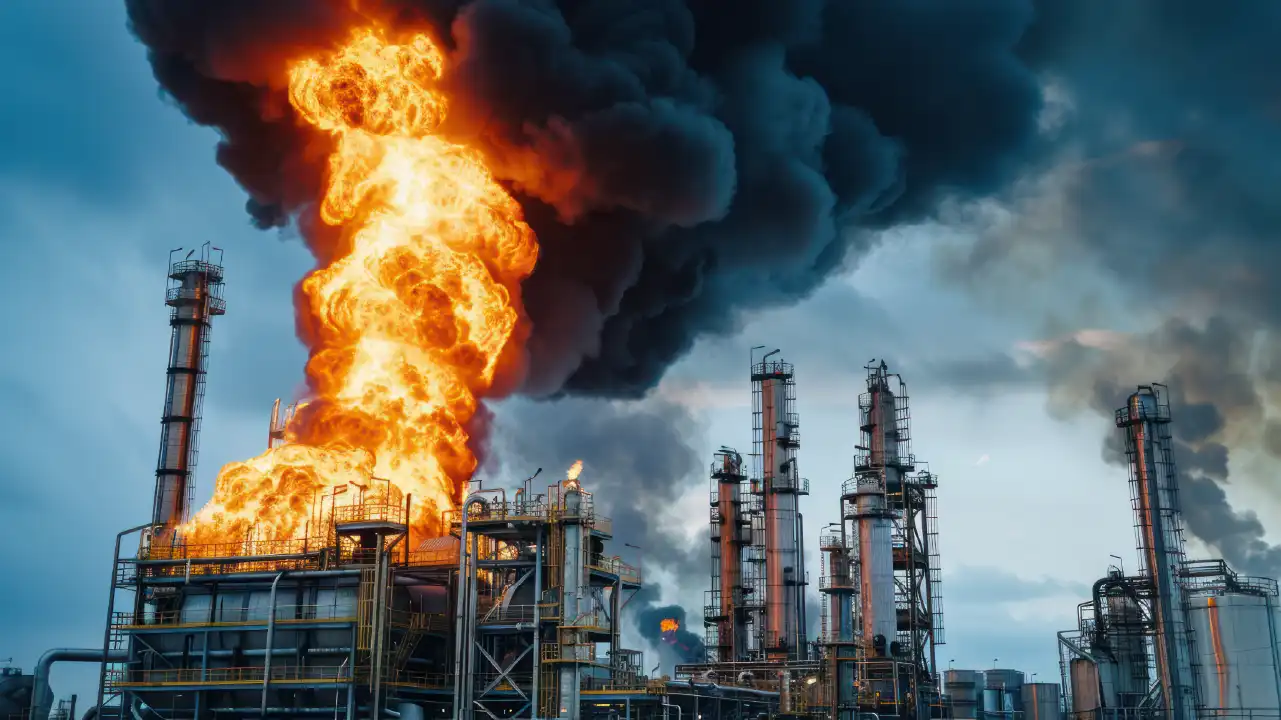
Two explosions tore through Brent Industries in Toledo, Ohio shortly before 5 a.m. on August 18, 2026, during a shift change. Two workers were killed. Several others suffered minor injuries and were treated at the scene.
The facility reconditions industrial textiles. Shop towels, work gloves, wipers, absorbents, and filter media come back dirty from industrial customers, get cleaned with mineral spirits, and go back out rather than to a landfill. The company was founded in Alabama in 1977 and runs processing plants in Alabama and Ohio.
The scale of the response tells you what responders were facing. Flames rose more than a hundred feet. Part of the building collapsed. Roughly 100 Toledo Fire and Rescue personnel responded, more than three times what a standard emergency draws. The fire chief described three simultaneous emergencies: a commercial structure fire, a structural collapse with workers possibly trapped, and a hazardous materials response. Crews also had to work around a ruptured water line inside the building that dropped hydrant pressure, forcing them to tap multiple hydrants while shutting it off.
Tanks of mineral spirits stood on the site, creating a live risk of further explosions while search operations were underway. The EPA was notified through the National Response Center around 9 a.m., and an on-scene coordinator dispatched responders to assist with air monitoring. Monitors showed no hazardous threat to the surrounding area, and no shelter-in-place order was issued.
The cause has not been determined. OSHA has opened an investigation and has six months to complete it.
Known Dangers, Zero Action
The company’s Alabama plant, running the same solvent-wash process, had a fatal explosion in 2015 that killed one worker and burned another. OSHA determined then that flammable vapor from mineral spirits had ignited in an industrial washing machine. The company was cited for roughly half a dozen violations and fined $27,000.
Eleven years, same solvent, same process, two more dead.
The operation itself is worth understanding, because it looks like laundry and behaves like a chemical process. A textile load goes into a washer, solvent is pumped in from exterior storage tanks, the drum agitates and then spins at high speed to extract the solvent, and the solvent-wet fabric transfers to separate dryers. That is a hazardous liquid inventory moving through vessels under mechanical energy, with ignition sources present throughout. On the org chart, it is a service business.
This is the quiet trap in solvent operations. Mineral spirits typically have a flash point above 100°F, which places it outside several of the thresholds that pull a facility into formal process safety management. Being outside a regulatory threshold is not the same as being outside the hazard. Heated solvent, agitation, high-speed extraction, and dryer heat can all put vapor above its flash point regardless of what the paperwork calls it.
Does this Incident Relate to Your Operation?
Most facilities holding bulk flammable or combustible liquids will never see a hundred-firefighter response. But every one of them has to answer a question in advance, and OSHA’s HAZWOPER standard at 29 CFR 1910.120(q) is where that answer lives.
The question is simple: when an uncontrolled release happens, will your employees respond, or will they leave?
If any of your employees will take action to stop, contain, or control a release, you need an emergency response plan under 1910.120(q)(1), and your responders need training matched to what you expect them to do. If instead you will evacuate everyone from the danger area and permit no employee to assist, you are exempt from that paragraph — but you then owe a compliant emergency action plan under 1910.38, and “we evacuate” has to be true in practice, not just on paper.
Choosing evacuation is a legitimate and often correct decision. What is not legitimate is choosing it implicitly, by never deciding, and then discovering during an incident that a maintenance supervisor is trying to isolate a leaking line with no training and no PPE.
Match Training to Actual Duties
HAZWOPER sets out five principal responder training levels under 1910.120(q)(6), plus provisions for skilled support personnel and specialist employees:
- First Responder Awareness — recognizes a release, notifies, and takes no further action. No mandatory hour minimum, but competency must be demonstrable.
- First Responder Operations — responds defensively to protect people, property, and the environment without attempting to stop the release. At least 8 hours.
- Hazardous Materials Technician — approaches the release point to stop it. At least 24 hours.
- Hazardous Materials Specialist — provides specialized technical support and agency liaison. At least 24 hours.
- On-Scene Incident Commander — assumes control of the response. At least 24 hours, with employer certification of competency.
Assigning operations-level duties to awareness-trained employees is one of the more common HAZWOPER findings, and it is easy to do accidentally — the training says awareness, the job description says something more.
It also matters to know where the line falls. An incidental release that a trained employee can safely absorb or clean up in the immediate area is not an emergency response and does not trigger paragraph (q); it is still governed by your hazard communication program under 1910.1200. A release that requires evacuation, poses a fire or explosion hazard, or presents an uncertain atmosphere is an emergency response, and everything above applies.
Three Things to Do This Month
- Give your fire department a walkthrough. They will arrive without knowing where your solvent tanks are, where isolation valves live, or where hydrant pressure comes from. The time to tell them is not at 5 a.m. through a radio.
- Reconcile your chemical inventory with what responders have on file. Reporting under EPCRA and your safety data sheets are only useful if the quantities and locations are current.
- Run the post-incident critique you already owe. 1910.120(q)(2)(x) requires a critique after emergency responses. Treat drills the same way, document what failed, assign corrective actions with owners and dates, and verify them. A critique filed without changing the plan protects nobody.
If you are still not sure whether your facility’s HAZWOPER program, emergency response procedures, or employee training are where they need to be, consider attending NASP’s final live HAZWOPER Train-the-Trainer class of 2026. Held October 26 through October 30 in Wilmington, North Carolina, the course provides practical instruction for those responsible for developing, delivering, and maintaining HAZWOPER training within their organizations.


Enroll in our Live Courses
Related Posts

The Hearings Are Over. The Standards Aren’t.
09.18.2026 Compliance
The Same Explosion, Eleven Years Apart: A Closer Look at the Brent Industries Incident
09.18.2026 Current Events
Both Employers Had Already Been Told. The Combined Fines Came to $860,628.
09.18.2026 Current Events
Explore Our Live and Online Safety Courses
Learn at your own pace online or join an instructor-led live training session.