

HAZWOPER Training Requirements & Courses
HAZWOPER training courses are required for workers involved in hazardous waste cleanup, hazardous material handling, and emergency response operations. OSHA’s Hazardous Waste Operations and Emergency Response (HAZWOPER) standard — 29 CFR 1910.120 — defines multiple HAZWOPER training requirements depending on the work environment and employee responsibilities.
What is HAZWOPER Training?
HAZWOPER training prepares workers to safely handle hazardous substances and respond to hazardous material incidents. Employees who work at hazardous waste cleanup sites, treatment or disposal facilities (TSDF), or who respond to hazardous material emergencies must receive HAZWOPER training appropriate to their role.
Depending on the work being performed, OSHA may require employees to complete 40-hour HAZWOPER training, 24-hour HAZWOPER training, annual refresher training, or specialized emergency response training. Supervisors and site managers often require additional training beyond the basic worker requirements.
This page outlines the different types of HAZWOPER training and helps you determine which course is required for your role. Whether you are performing environmental cleanup, working at a treatment or disposal facility, or responding to hazardous material emergencies, understanding the correct OSHA training requirement is essential for compliance and worker safety.
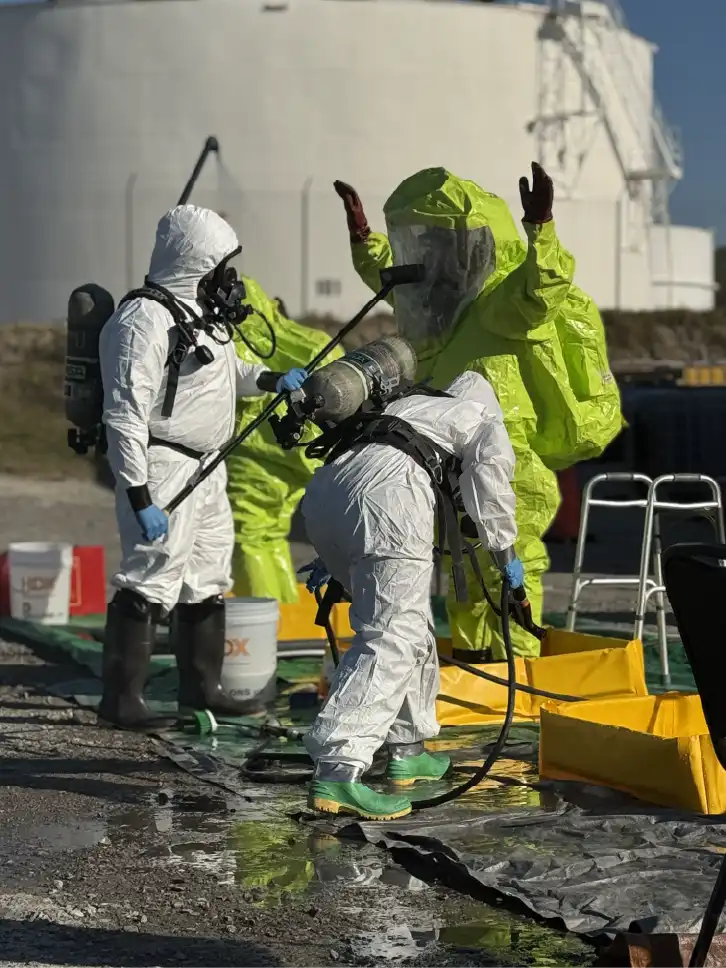
Which HAZWOPER Training Do You Need?
HAZWOPER training requirements vary based on the work environment and responsibilities of the employee.
OSHA divides HAZWOPER training into three primary categories:

General Site Workers
This category, detailed in 1910.120(e), applies to workers at uncontrolled hazardous waste sites (e.g., RCRA or Superfund sites) or who are involved in environmental cleanup operations.

TSD Facility Workers
This category, detailed in 1910.120(p), applies to employees working at permitted Treatment, Storage, and Disposal (TSD) facilities, which are typically more controlled environments.

Emergency Responders
This category, detailed in 1910.120(q), applies to anyone who responds to an emergency release of hazardous substances. Training is based on the role the individual will perform.
General Site Workers
This category, detailed in 1910.120(e), applies to workers at uncontrolled hazardous waste sites (e.g., RCRA, Superfund, or voluntary cleanup sites) or who are involved in environmental cleanup operations.
Role
Engaged in hazardous substance removal, or other activities on an uncontrolled hazardous waste site. This includes all forms of environmental cleanup.
(e.g., equipment operators, laborers-including drillers and well installation, supervisors)
Initial Training
40-Hour General Site Worker - 1910.120(e)(3)(i)
Recommended Course:
Site-specific only
(Groups of 5 or more)
24-Hour Occasional Site Worker - 1910.120(e)(3)(ii) & (iii)
Recommended Course:
Site-specific only
(Groups of 5 or more)
Management & Supervisors - 1910.120(e)(4)
Recommended Course:
HAZWOPER Supervisor

Refresher Training
All levels - 1910.120(e)(8)
Recommended Course:
8-HR HAZWOPER Refresher

TSD Facility Workers
This category, detailed in 1910.120(p), applies to employees working at permitted Treatment, Storage, and Disposal (TSD) facilities, which are typically more controlled environments.
Role
Handling hazardous substances at a treatment, storage, or disposal facility. (e.g., plant operators, maintenance personnel, lab techs)
Initial Training - 1910.120(p)(7)
Recommended Course:
Site-specific only
(Groups of 5 or more)
Refresher Training - 1910.120(p)(7)
Recommended Course:
8-HR HAZWOPER Refresher
Emergency Responders
This category, detailed in 1910.120(q), applies to anyone who responds to an emergency release of hazardous substances. Training is based on the role the individual will perform.
Role
Respond to emergencies, often from off-site, involving releases of hazardous substances. (e.g., firefighters, industrial hazmat teams, medical staff)
Initial Training
LEVEL
1
First Responder Awareness - 1910.120(q)(6)(i)
Recommended Course:
HAZMAT Emergency Response Awareness

LEVEL
2
First Responder Operations - 1910.120(q)(6)(ii)
Recommended Course:
HAZMAT Emergency Response Operations Level Training

LEVEL
3
Hazardous Materials Technician - 1910.120(q)(6)(iii)
Recommended Course:
24-HR HAZWOPER Hazardous Materials Emergency Response Technician

LEVEL
4
Hazardous Materials Specialist - 1910.120(q)(6)(iv)
Recommended Course:
24-HR HAZWOPER Hazardous Materials Emergency Response Technician
(additional specialty skills will
need to be sourced by the student)
LEVEL
5
On-Scene Incident Commander - 1910.120(q)(6)(v)
Recommended Course:
HAZMAT Emergency Response Incident Commander Training

Refresher Training
All levels - 1910.120(q)(8)
Recommended Course:
HAZMAT Emergency Response Refresher

How to Become a Qualified HAZWOPER Trainer
Initial Qualification
The requirements for trainers are defined in 1910.120(e)(5) (and referenced in 1910.120(p)(7)). OSHA does not certify, approve, or accredit HAZWOPER trainers. The standard places the responsibility on the employer to certify that their chosen trainer is qualified.
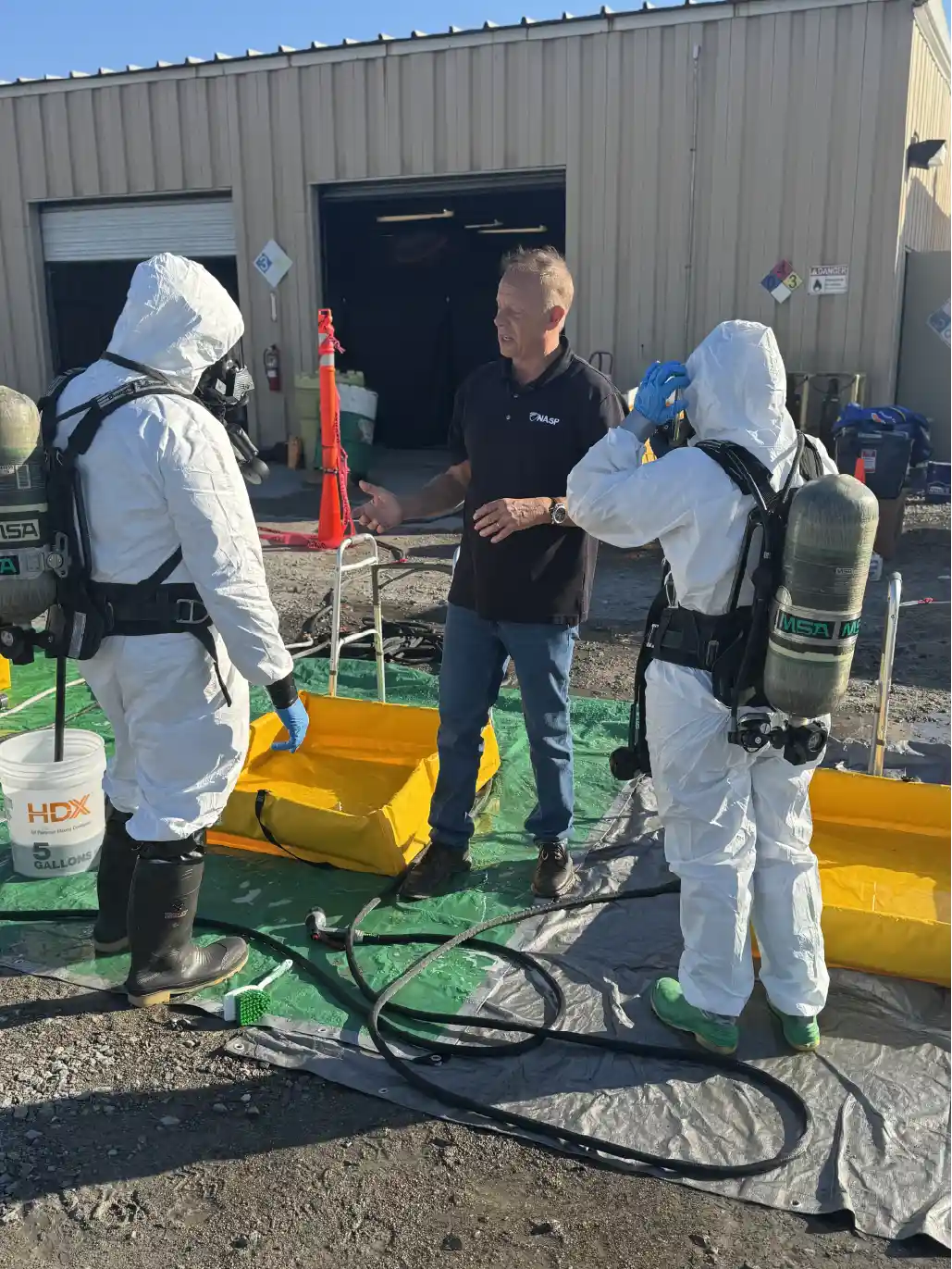
To be a "qualified trainer," a person must:
1
Be deemed competent on the basis of previous documented experience in their area of instruction; AND
2
Have successfully completed a "train-the-trainer" program specific to the topics they will teach
In all cases, the trainer must be able to demonstrate competent instructional skills and a thorough knowledge of the subject matter.
Because OSHA does not issue an initial "certification" for trainers, there is no formal OSHA "recertification" requirement for trainers.
However, trainers are required to maintain their competency. 1910.120 App E suggests that instructors attend a ‘successful completion of a "train-the-trainer" program specific to the topics they will teach’ , maintain professional competency by participating in continuing education, professional development programs, or completing an annual refresher course. Ultimately, it is the employer's responsibility to ensure their trainers remain qualified and knowledgeable of current regulations and practices.
Become a Certified HAZWOPER Trainer
Safety professionals who want to train employees in OSHA HAZWOPER requirements often complete a HAZWOPER Train-the-Trainer course to demonstrate instructional competency and subject-matter expertise.
NASP offers a 40-Hour HAZWOPER Train-the-Trainer course designed for environmental health and safety professionals responsible for delivering HAZWOPER training within their organization. The course provides in-depth coverage of OSHA’s HAZWOPER standard (29 CFR 1910.120) along with hands-on practical exercises that prepare instructors to teach hazardous waste operations and emergency response training.
Participants gain the knowledge and tools needed to implement effective HAZWOPER training programs and strengthen workplace safety systems.
Recommended Course
40-Hour HAZWOPER Train-the-Trainer
This comprehensive course prepares safety professionals to teach HAZWOPER training and develop effective hazardous waste safety programs.
Key topics include:
-
OSHA HAZWOPER regulations and compliance requirements
-
Hazard evaluation and monitoring procedures
-
Chemistry, toxicology, and industrial hygiene
-
Emergency response and decontamination procedures
-
Spill and leak control techniques
-
Hands-on demonstrations and practical simulations
Students also receive access to professional safety resources including regulatory guidance materials and training program templates.

Live
*Recommended*
NASP’s live HAZWOPER Train-the-Trainer course provides hands-on practical simulations and instructor-led demonstrations to help participants meet OSHA’s experiential expectations for instructors.
This format is ideal for safety professionals who want to gain real-world teaching experience and practical hazard response training.
Online
For professionals who prefer remote learning, NASP also offers an online HAZWOPER Train-the-Trainer course covering the same regulatory requirements and training fundamentals.
Note: Practical training must also be obtained to qualify yourself to meet the ‘experiential’ requirements of the standard.

Explore Our Live and Online Safety Courses
Learn at your own pace online or join an instructor-led live training session.