

The Confined Space You Didn’t Know You Had
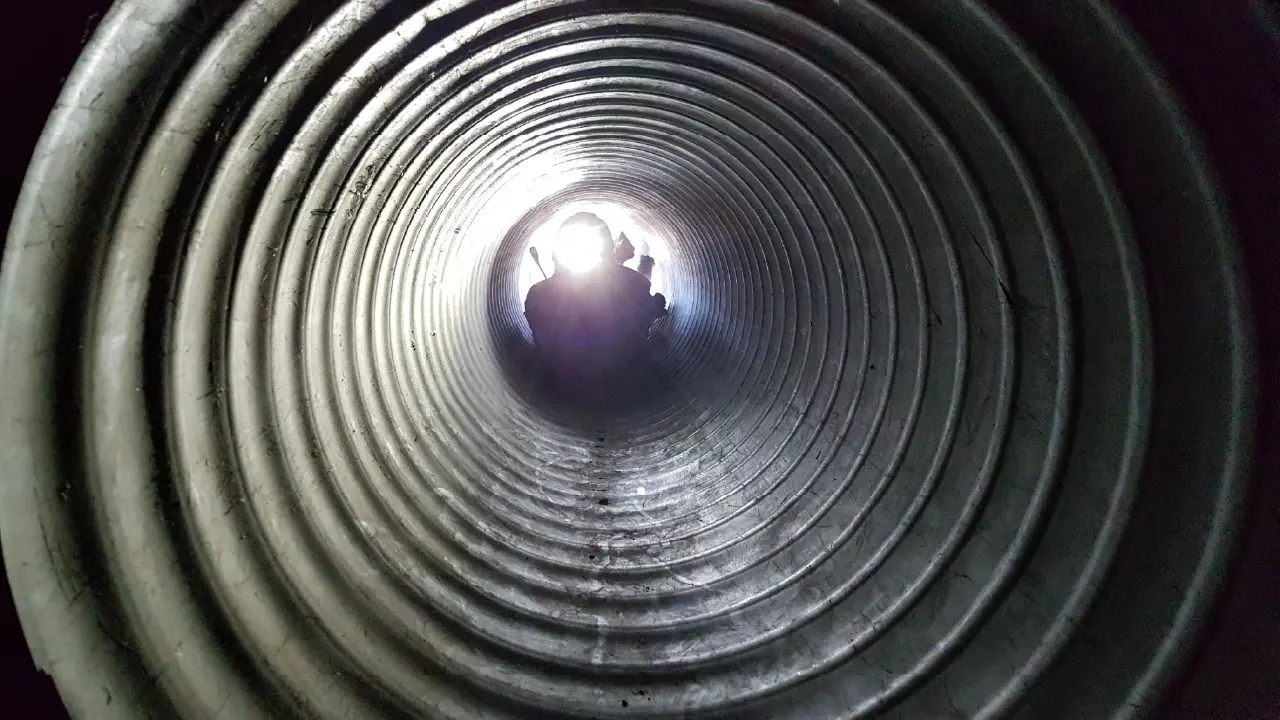
Two enforcement actions above involved confined spaces, and one killed a worker inspecting a tanker trailer. These fatalities share a frustrating characteristic: they are preventable using knowledge the profession has had for decades. The failures are usually failures of recognition and program discipline, not technical knowledge.
Here is a walkthrough you can run at your own facility over the next few weeks.
- Re-inventory your spaces.
Most inventories reflect the facility as it existed when someone last walked it with a clipboard. Walk it again, looking for spaces added, modified, or repurposed since: new vessels, pits added during a line change, equipment enclosures, hoppers, silos, sumps, ductwork, vaults. Then extend beyond fixed plant equipment — mobile and transient spaces are the ones programs miss most: tanker trailers, rail cars, portable tanks, roll-off containers. A space does not have to be part of your building to be a permit-required confined space at your facility. For each space, document three things: whether it meets the definition of a confined space, whether it meets the additional permit-required criteria, and what the specific hazards are.
- Test your recognition layer.
Ask a maintenance technician, a contractor, and a newer employee: “If you needed to get inside that vessel, what would you do first?” You are not testing whether they can recite the standard. You are testing whether entry triggers a pause. Any version of “I’d just open it up and take a look” is your finding.
- Verify atmospheric monitoring in practice.
Check that calibration and bump test records are current and that bump tests actually happen before use rather than being signed off retroactively. Confirm the testing sequence — oxygen first, then flammables, then toxics. Confirm testing occurs at the top, middle, and bottom of the space, since atmospheres stratify. Confirm monitoring is continuous throughout the entry rather than a single reading assumed stable. And confirm your sensors actually detect the hazards present in that specific space; a four-gas meter does not detect everything.
- Pressure-test your rescue plan.
This is where most programs are weakest and the consequences most severe — a substantial share of confined space fatalities are would-be rescuers. Name the people who perform rescue, not the department. Confirm they are trained, equipped, and available on every shift during which entry occurs. If you rely on outside emergency services, confirm in writing that they can perform confined space rescue and that they have seen your spaces. Compare realistic response time against survival time in an oxygen-deficient atmosphere; if the numbers do not work, the plan does not work. Prefer non-entry retrieval wherever the configuration allows.
- Audit your permits.
Pull the last twenty and read them critically. Look for permits completed identically regardless of conditions, missing atmospheric readings, blanks left unfilled, signatures added after entry, permits left open past their duration. A permit showing no variation across twenty entries documents a habit, not a hazard assessment.
- Close the contractor gap.
Confirm you have informed contractors of permit spaces and known hazards, obtained their entry program, coordinated operations when both parties work in or near the same space, and debriefed afterward.
One note on reclassification: it applies only when all hazards have been eliminated, not controlled. Ventilation controls an atmospheric hazard; it does not eliminate it. If the hazard returns when the fan stops, the space was not eligible.
Confined space programs decay predictably: built carefully, they work, entries become routine, routine becomes shortcuts, and eventually the paperwork describes a process that no longer resembles the field. The countermeasure is periodic verification by someone who was not involved in building the program. Watch an actual entry rather than reading about one. For more information on developing a comprehensive confined space entry and rescue plan, click here to learn about our instructor-led training coming this September.


Interested in confined space safety?
Check out our live Confined Space Entry & Rescue Program Manager course!
Related Posts

The Hearings Are Over. The Standards Aren’t.
09.18.2026 Compliance
The Same Explosion, Eleven Years Apart: A Closer Look at the Brent Industries Incident
09.18.2026 Current Events
Both Employers Had Already Been Told. The Combined Fines Came to $860,628.
09.18.2026 Current Events
Explore Our Live and Online Safety Courses
Learn at your own pace online or join an instructor-led live training session.