

Cause of Watson Grinding Explosion & Fatalities Determined
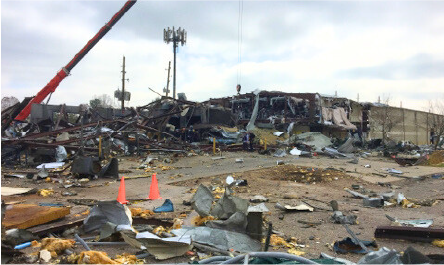
An explosion at Watson Grinding and Manufacturing Company, a spray-coating facility, in January, 2020 killed two workers and damaged hundreds of surrounding structures. What happened? Investigators from the US Chemical Safety and Hazard Investigation Board (CSB) discovered that personnel had not received adequate safety training. It was also determined that the corporation failed to give its personnel proper safety training on hazardous chemicals and how to appropriately respond to emergencies.
According to a CSB report, the lack of training contributed to the severity of the incident.
Watson Grinding and Manufacturing Company was a small specialty grinding firm with an on-site spray-coating plant in Houston, Texas. In their spray-coating technique, the corporation used propylene, an extremely flammable gas. Propylene is colorless and smells like petroleum. According to the propylene safety data sheet (SDS), “accidental discharges offer a significant fire or explosive risk”.
Propylene was supplied via an on-site storage tank capable of holding up to 8,600 pounds of the chemical in liquid form, with the gas piped into the spray-coating facility. Two manually operated valves and one remote shut-off valve regulated the flow of the gas. Watson Grinding’s original spray-coating facility was destroyed in a propylene explosion and fire in 2008, so there were some safety standards in place, but no official safety training for employees.
However, due to a lack of training and written protocols, supervisors and staff ceased closing the storage tank valves at the conclusion of each workday. Instead, the technique was modified to close the valves only during extended times of no labor, such as weekends or holidays. In addition, the gas detection alarm was no longer operational.
A propylene hose in one of the booths became separated from its fitting overnight due to incorrect crimping. The combustible gas escaped through the open storage tank valves and gathered within the coating building via the hose.
Two employees arrived at the premises the next morning to workout at the workplace gym. One of them smelled a propylene odor outside the building and texted the coating supervisor to tell him of a suspected gas leak. Both staff returned to the gym and resumed their workouts. A plant manager was also informed of the possible leak.
Neither of the management-level employees considered informing the personnel exercising in the gym to leave the premises.
Shortly thereafter, an employee entering the plant turned on the lights, igniting the flammable vapor, causing the coating building to explode.
The explosion killed one of the staff at the gym and the employee who turned on the lights. A nearby resident was also killed, and the explosion damaged more than 450 homes and businesses. The explosion was caused by the ignition of around 2,600 pounds of propylene that had been released inside the factory.
Watson Grinding declared bankruptcy following the incident and is no longer in business.
Purchase Our Incident Investigation Specialist (IIS) Course
Related Posts

OSHA’s FY2026 Top 10 Looks Exactly Like Last Year’s. September’s Citations Show Why.
10.07.2026 Current Events
OSHA’s New Overdose Guidance Wants Naloxone Stored Next to Your AED
10.07.2026 Compliance
Two Valves, Six Minutes, $95 Million: The CSB’s Final Report on the Shell Monaca Explosion
10.07.2026 Current Events
Explore Our Live and Online Safety Courses
Learn at your own pace online or join an instructor-led live training session.