

A Blocked Stairwell and a Corroded Sprinkler
Twenty-Eight Killed in Chinese Footwear Factory Fire
On July 9, 2026, a fire at the Huiteng Shoes factory in Jinjiang, Fujian province, China killed twenty-eight people. The blaze began just after noon on the ground floor of a five-story concrete building, in an area used for workshop operations and material storage. Of the 239 people inside, responders evacuated 213; twenty-six initially reported missing were later confirmed dead.
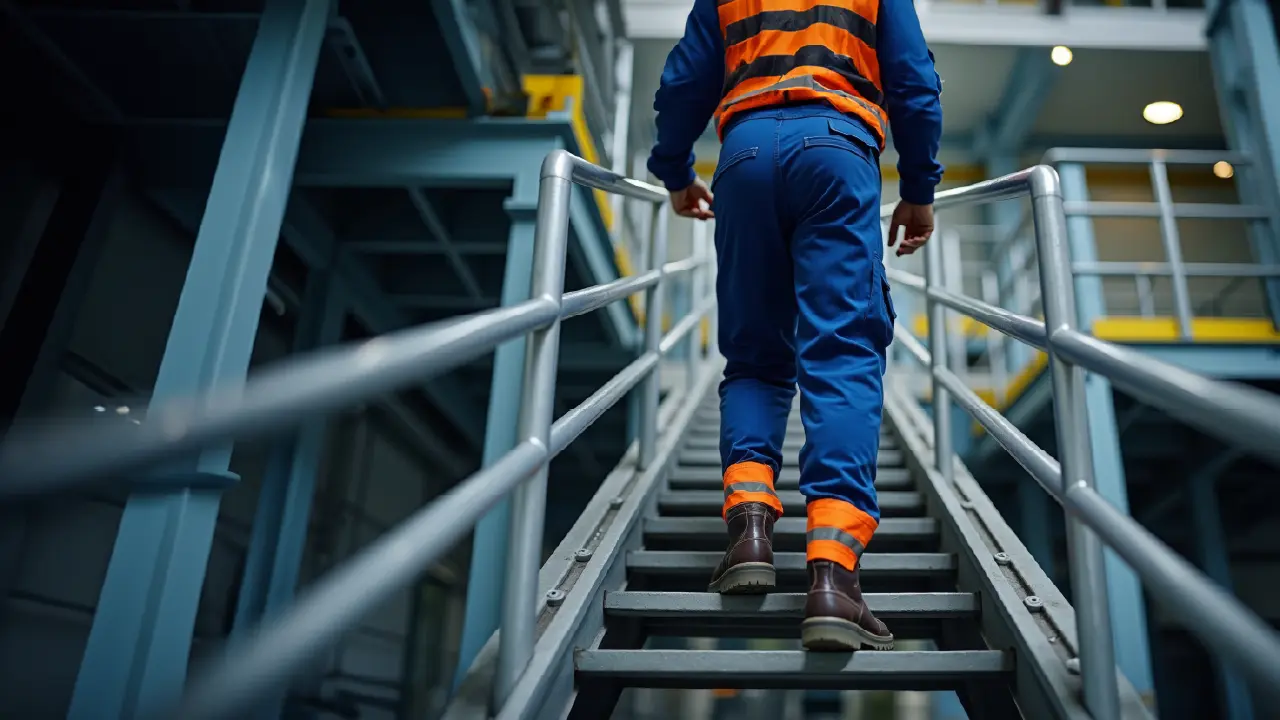
Two details matter. The materials accelerated the fire — shoe manufacturing involves large volumes of adhesives, solvents, and synthetic sole materials that burn readily and produce dense toxic smoke. And stairwells were obstructed. A local fire official told state media that shoe materials piled in stairwells slowed firefighters reaching the upper floors. Footage showed workers trapped on the roof as hose spray fell short of the flames.
Jinjiang is often called China’s “shoe capital,” producing roughly a fifth of the world’s athletic footwear. Authorities have detained the company’s owner and frozen its accounts, and the fire has renewed national scrutiny of production safety standards following a series of fatal industrial accidents.
It would be a mistake to file this away as a problem that happens elsewhere. Storage creep is gradual: a pallet gets staged near an exit because the aisle is full, it stays, another joins it, and within months an egress route has become overflow storage without anyone deciding to allow it. Walk your egress routes at the times production pressure is highest — second shift, a rush order, the week the warehouse is over capacity. That is when you find out what your exits actually look like.
CSB Releases Final Report on the BioLab Warehouse Fire
In late July, the U.S. Chemical Safety Board published its final report on the September 29, 2024 chemical release and fires at a BioLab warehouse in Conyers, Georgia.
The cause was remarkable for how mundane it was: a corroded sprinkler component failed, allowing water to contact chlorinated isocyanurates. The reaction generated heat, which activated additional sprinkler heads, which wetted more reactive chemicals. The cascade produced fires and a plume containing chlorine, hydrogen chloride, and bromine. Roughly 17,000 people evacuated, 90,000 were advised to shelter in place, nightly warnings continued within a two-mile radius for seventeen days, and schools closed for nearly two weeks.
The corrosion mechanism was straightforward chemistry: chlorine fumes combined with warehouse humidity and condensed as hydrochloric acid on metal surfaces, including sprinkler heads. It began soon after BioLab started storing the material there in 2019.
Storage volume also drifted. Pre-construction documentation described an expected average inventory of roughly 6.2 million pounds. At the time of the incident, the warehouse held nearly 14 million pounds, including about 5,000 “super sacks” that did not protect their contents from moisture. The building was not air conditioned and its ventilation did not manage humidity.
The CSB identified five key issues: run to failure, identification of storage hazards, risk management and oversight, industry guidance for pool treatment chemicals, and regulatory coverage of reactive hazards. It reiterated recommendations to OSHA and EPA to expand regulatory coverage of reactive hazards capable of catastrophic consequences, and issued recommendations to KIK Consumer Products and the National Fire Protection Association. The fire destroyed the warehouse, and operations at the site ceased in May 2025.
The Common Thread
Neither incident involved an exotic hazard. Both involved conditions that developed slowly enough to stop looking abnormal to the people who saw them daily. Ask what has changed at your facility since your hazard analysis was last updated — inventory volumes, storage locations, material types, building modifications — then ask whether your controls were designed for what you have now or what you had then.


Interested in fire prevention?
Check out our online Fire Prevention Specialist course!
Related Posts

The Hearings Are Over. The Standards Aren’t.
09.18.2026 Compliance
The Same Explosion, Eleven Years Apart: A Closer Look at the Brent Industries Incident
09.18.2026 Current Events
Both Employers Had Already Been Told. The Combined Fines Came to $860,628.
09.18.2026 Current Events
Explore Our Live and Online Safety Courses
Learn at your own pace online or join an instructor-led live training session.