

How Workplace Safety Training Is Changing

Workplace safety training used to follow a predictable format. Employees gathered in a room, an instructor led the session, and everyone completed the same material at the same time. That model still exists, but the way companies deliver safety training has changed significantly.
Today, employers are using a mix of online learning, site-specific instruction, and open enrollment classes. Data from OSHA highlights just how much things have shifted. In FY 2025, OSHA’s Outreach Training Program recorded 1,581,471 trainees. Of those, 961,918 completed their training online, which represents 60.8 percent. In FY 2016, that number was only 29.8 percent.
Are online classes still popular?
Yes. Online training is now the dominant format for many types of workplace safety education.
The steady increase in OSHA Outreach Training participation shows that online delivery is no longer a temporary solution. It has become a standard method for providing hazard awareness training. The convenience of self-paced learning, combined with the ability to train workers across multiple locations, has made online courses especially attractive for employers.
This trend also aligns with broader market growth. The global OSHA safety training market was valued at about $4.8 billion in 2025 and is projected to nearly double over the next decade, driven in part by increased adoption of digital and online learning platforms.

Are online classes still effective?
Online training can be effective when it is implemented as part of a larger safety program.
Research shows that structured safety training has a measurable impact. Some studies indicate companies with comprehensive safety training programs experience up to a 50 percent reduction in workplace injuries, along with improved hazard recognition and safer worker behavior.
However, effectiveness depends on more than delivery format. OSHA itself notes that Outreach training is designed to build hazard awareness and understanding, not to replace employer-specific training requirements.
This reinforces an important point. Online training works best when it is paired with real-world application, supervision, and reinforcement on the job.
Is site-specific training an option for smaller companies?
Yes, and in many cases it is necessary.
OSHA makes it clear that Outreach training does not replace required workplace training tied to specific hazards. Employers are still responsible for ensuring workers are trained on the actual risks they face in their own work environment.
For smaller companies, this does not mean building a full internal training program from scratch. Many organizations use a blended approach, combining online courses with toolbox talks, hands-on instruction, and targeted safety meetings that reflect site conditions.
This approach is especially important because gaps in training are more common in smaller operations. Some studies show that fewer than 20 percent of workers in certain small-scale industries have received formal safety training, highlighting the need for more accessible, job-specific solutions.
Are people still attending open enrollment classes?
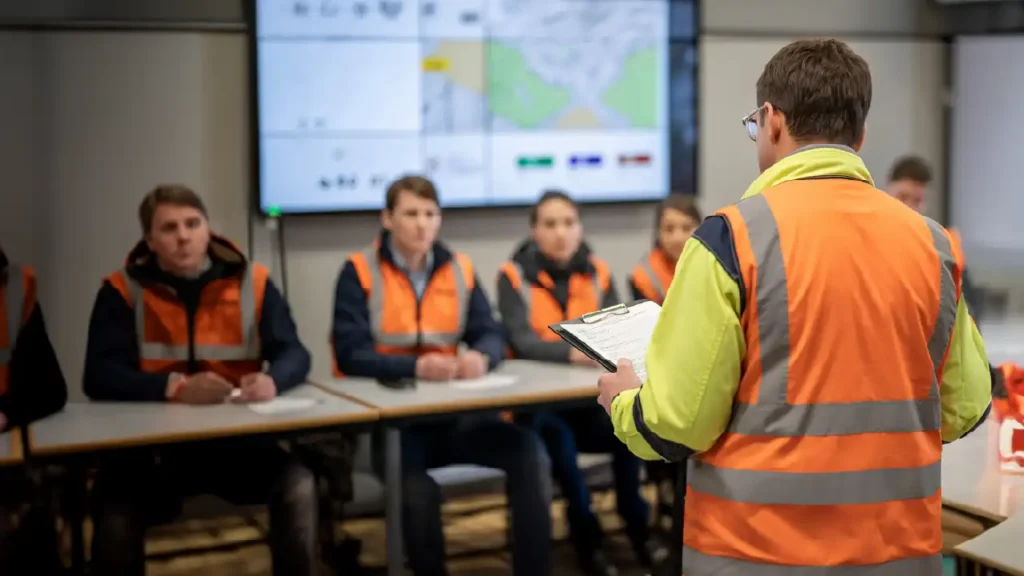
Yes, but their role has shifted.
Open enrollment classes are still widely used for more advanced topics, trainer development, and specialized instruction where interaction and discussion are valuable.
At the same time, the rise of online training has changed how these classes are used. Basic awareness training is increasingly delivered online, while in-person and live virtual classes are often reserved for more complex or hands-on topics.
What does this mean for employers?
The shift in training trends does not point to a single best method. Instead, it highlights the importance of using the right format for the right purpose.
Online training has become the primary tool for scalable, flexible learning. Site-specific training remains critical for addressing real workplace hazards and meeting OSHA expectations. Open enrollment classes continue to play an important role in advanced and instructor-led education.
The most effective safety programs combine all three approaches. Employers who adapt to this blended model are better positioned to improve safety outcomes, meet regulatory requirements, and engage today’s workforce.


Related Posts

OSHA’s FY2026 Top 10 Looks Exactly Like Last Year’s. September’s Citations Show Why.
10.07.2026 Current Events
OSHA’s New Overdose Guidance Wants Naloxone Stored Next to Your AED
10.07.2026 Compliance
Two Valves, Six Minutes, $95 Million: The CSB’s Final Report on the Shell Monaca Explosion
10.07.2026 Current Events
Explore Our Live and Online Safety Courses
Learn at your own pace online or join an instructor-led live training session.