Construction Safety Regulations: Navigating Compliance and Ensuring Worker Safety

Worker health and safety are priorities in the construction industry because small oversights can have significant consequences. However, staying on top of safety-related regulatory compliance can be challenging without the right support for leaders, supervisors, and crew members.
What legislation regulates safety on construction sites? And how can construction businesses ensure adherence? Learn more about relevant laws, navigating worker safety regulations, and how partnering with expert consultants can streamline compliance below.
Importance of Construction Safety Regulations and Compliance
Closely adhering to health and safety regulations is crucial in the construction industry for several reasons:
- Worker protection: Construction is one of the most dangerous sectors in the world, with the most workplace deaths in the United States in 2023. Construction safety regulations help teams prevent serious injuries and fatalities.
- Worker morale: When teams feel supported and safe on the job, they are more likely to have a positive relationship with their work, boosting crew engagement and helping businesses attract the most skilled workers.
- Legal duties: Businesses must meet statutory requirements from regulatory bodies. Failure to adhere to important laws can result in serious consequences, such as fines, stop-work orders, and criminal liability.
- Financial impacts: Safer jobsites mean lower long-term costs related to incident cleanup, insurance premiums and rework. Health and safety hazards on the job can also contribute to project delays and unfavorable profit margins.
- Project productivity and quality: Following safety regulations helps teams reduce project disruptions and drive greater productivity. Building tasks can be completed with greater workmanship and smoother workflows when potential hazards are contained and avoided.
- Company reputation: Maintaining a strong record of safe, secure jobsites is key to attracting new clients and winning competitive bids. Prospective clients want to feel good about working with your company and know your business prioritizes its personnel.
Health and Safety Regulations for Construction
Businesses in the construction industry must adhere to the following regulations to stay compliant.
Occupational Safety and Health Administration (OSHA)
OSHA’s construction health and safety regulations are outlined under Title 29 of the Code of Federal Regulations (CFR) in Part 1926. These include guidelines on managing industry-specific hazards, including:
- Cranes and derricks
- Electrical
- Fall protection
- Personal protective and lifesaving equipment
- Scaffolding
- Stairways and ladders
- Toxic and hazardous substances
Construction site safety professionals must follow the detailed sections of 29 CFR 1926 and remain updated on the latest revisions to protect workers and ensure compliance.
Remember, these standards are subject to change. For instance, OSHA finalized revisions to personal protective equipment (PPE) standards for construction workers in December 2024. The updates required all PPE, such as gloves and hard hats, to be sized to fit workers properly.
State-Specific Regulations
While all construction businesses operating within the U.S. are subject to federal OSHA regulations, some states mandate additional health and safety guidelines for workers.
Be aware of any OSHA-approved State Plans — these can include more stringent requirements for the construction industry. For example, California has additional regulations for outdoor heat illness prevention. In Virginia, construction industry professionals must follow additional guidelines for Reverse Signal Operation for Vehicles, Machinery, and Equipment.
Common Safety Compliance Challenges in Construction
Safety professionals may face several challenges regarding federal and state-level regulatory compliance. Construction work can be unsafe, with common jobsite hazards including:
- Electrocution
- Equipment and power tool accidents
- Hazardous materials
- Heat and environmental stressors
- Height risks
- Trips, slips, and falls
- Vibration and noise exposure
Crews must follow proper protocols to reduce risk exposure on the job. OSHA also requires thorough documentation to support worksite safety, such as recordkeeping for the following:
- Accident prevention programs
- Injuries and illnesses
- Hazard communication plans
- Employee training
- Site inspections
- Medical surveillance
Another common compliance challenge for safety personnel is training team members on the latest protocols and solutions to reduce safety risks. Regulatory standards evolve, and staying updated on the latest revisions or additions can present issues for companies in the industry.
Juggling these responsibilities and successfully maintaining compliance can be a significant hurdle for some construction businesses.
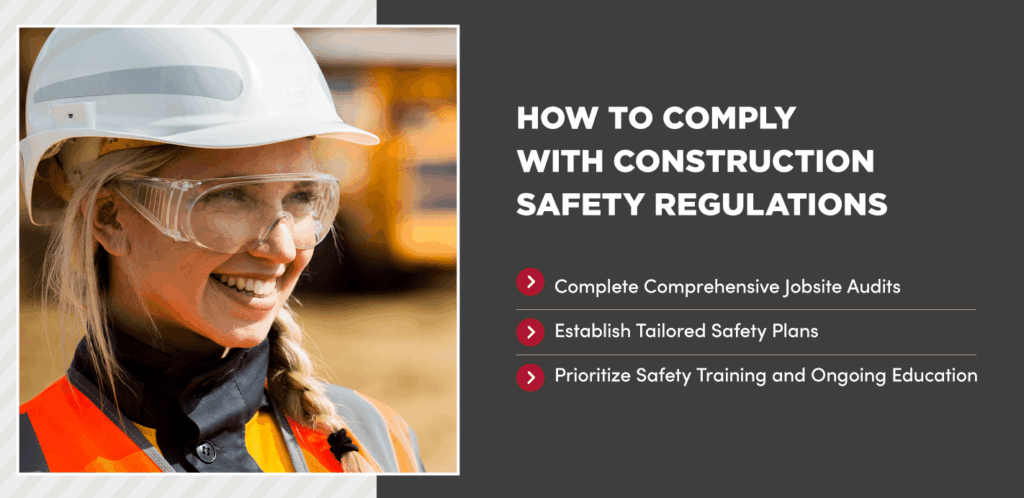
How to Comply With Construction Safety Regulations
An effective way to achieve compliance is partnering with experts, like the team at The National Association of Safety Professionals (NASP). Experienced safety professionals can help your team ensure regulatory adherence while creating a safer, healthier jobsite.
Complete Comprehensive Jobsite Audits
Safety professionals who are certified can conduct a thorough jobsite audit to evaluate safety practices. Their extensive knowledge of OSHA standards helps them proactively flag potential hazards, so your team can take corrective action and combat compliance issues or fines.
These audits should also include assessing your safety plans to ensure they are comprehensive, specific, and detailed. An expert can also analyze your safety records to confirm accuracy.
Once the comprehensive jobsite audit is complete, you’ll understand where your crew is fulfilling requirements and if any opportunities for improvement exist.
Establish Tailored Safety Plans
Construction companies can partner with expert safety consultants to create tailored safety plans and standard operating procedures (SOPs). These plans help teams address hazards specific to the projects they are working on.
After a comprehensive audit to flag site-specific risks, a consultant can evaluate and enhance your business’s safety documentation. They can customize plans to ensure your jobsite meets all OSHA regulations and that worker protocols support optimized safety for your team throughout the entire building process.
Prioritize Safety Training and Ongoing Education
Proper jobsite safety starts with an informed team. Every construction business should prioritize proper safety training and continued education to help workers better understand how to identify and address potential hazards.
Adequate training is crucial for establishing the safest jobsite and producing the highest-quality work for all projects. Teams must be well-versed in the following:
- Proper equipment protocols
- Risk recognition
- PPE
- Emergency procedures
Everybody on a given jobsite should be thoroughly trained on safety best practices. Ongoing training is key to continuously creating safer working environments and minimizing risks on the job. Workers should obtain safety certifications and complete workplace safety exams.
Contact NASP for Construction Safety Consulting Services Today
When you want to transform your business’s construction safety practices, turn to the experienced consultants at NASP. We offer specialized solutions for your industry, helping your team identify and mitigate potential risks to fulfill regulatory compliance requirements.
Our on-site safety consulting services for construction help you establish better working conditions for your personnel. We offer training to show crews how to cultivate an improved safety culture and meet all OSHA standards.
Are you ready to enjoy greater peace of mind knowing you’ve done your part to keep your team safe? Contact our experts to learn more about safety consulting services from NASP today.
Related Posts

The Environmental Cost of Data Centers
02.13.2026 Technology
DOT in Hot Water over Use of AI
02.13.2026 Compliance
The Benefits of Site-Specific LMS Courses
02.13.2026 Safety Culture